

 Exchange Rate
 Chat to Support

 ភាសាខ្មែរ


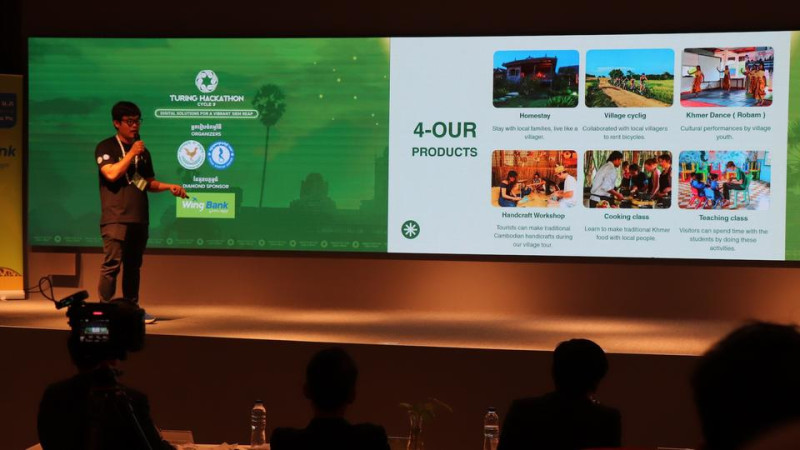
A group of young innovators from Siem Reap have developed a digital platform, TechSquadso TH, winning first place for successfully connecting visitors and handicraft makers, as well as homestay providers, in Srah Srang village, thereby improving their livelihoods through the revival of community-based tourism.
Turing Hackathon Cycle 9, which is supported by Wing Bank, offers a platform for innovators to generate and validate business ideas through impactful digital solutions for challenges in Siem Reap, while simultaneously connecting and building a strong local startup ecosystem.
This year, the hackathon focused on “Digital solution for a vibrant Siem Reap”, which opened up opportunities for young people in Siem Reap and other provinces to build and test their digital business ideas to meet demand and address community issues, especially tourism in their communities.
Eighty-five applications were shortlisted, comprising four teams from Phnom Penh, six teams from Siem Reap and five individuals, who presented their innovative ideas at the final hackathon round after being trained in Human Centre Design, Lean Canvas and pitching by mentors from different fields.
Sea Vanhai, who has a Master’s degree in Management and works as a freelance IT staff at a phone shop in Wat Bo, Siem Reap, was curious about start-ups and wanted to expand his entrepreneurial and innovative skills. In September 2025, he took part in Turing Hackathon 9 initiated by Techo Startup Centre, with students from other disciplines.
Speaking after receiving their award, Vanhai, who was part of a team of three members, said they discussed local tourism issues as part of their task and came up with an idea to help local communities.
Turning Srah Srang villagers’ struggles into opportunities
His teammate, Savorn Sreytouch, a fourth year undergraduate at Southeast Asia University majoring in Khmer literature, said she used to do volunteer work in Srah Srang village.
She noticed the challenges faced by local villagers—earning very little income from daily farming and selling their handmade handicrafts. Many were poor and found difficulty supporting their children's education at the same time.
She highlighted this issue with the team to come up with innovative ways to increase their livelihoods by promoting tourist activities there. “The villagers make handicraft souvenirs that are sold to intermediaries, who sell them to other people in town. This is how they support their family income, including their children’s education,” she told Kiripost.
There are approximately 200 families, which is equivalent to over 1,000 people living in Srah Srang village. Srah Srang or “Royal Bath” is a baray or reservoir in Angkor, located southeast of Baray and east of Banteay Kdei in the province.
Sreytouch said the local community struggles to sell their handicrafts due to low visitor numbers. As such, they are dependent on intermediaries to sell their products in town or popular tourist sites, which hinders them from selling them at a good price to support their livelihood.
According to her, Srah Srang village does not have many tourist attractions compared to villages like Preah Dak village—popular for its Khmer traditional food, including Noum Thnot, a Khmer cake made from palm sugar.
However, after conducting research, Vanhai and his team came up with an innovative idea to develop an app to serve as a marketplace for Srah Srang villagers to promote their products. Calling it “TechSquadso TH”, the digital platform promotes local handicrafts and traditional performances, connects villagers with tourists and opens up opportunities for cultural exchanges and income generation.
The app is also a platform to connect local and international tourists to book fun and adventurous activities and homestay packages in Srah Srang so the people not only earn from handicraft sales but also through tourism activities.
The team curated the activities for the villagers to offer visitors, such as learning to cook traditional Khmer food, discovering the village by cycling, and watching cultural performances.
“We wanted to create an app for them to sell their handicrafts, but there were challenges applying for handicraft and tour licenses. So, we decided to combine them. There is an activity for tourists to make their own handicraft and take it back as a souvenir which also helps local people earn an income. Similarly, they also offer activities like cooking, adventure cycling, and sharing local traditions,” Vanhai said.
Using tech to resolve critical tourism issues
According to the World Bank, tourism accounted for about 17 percent of the pre-pandemic gross domestic product. Ecotourism also played a significant role in boosting the tourism economy, with 16 percent of all tourists visiting ecotourism sites, the numbers doubling between 2014 and 2019.
However, the current slowdown in tourism prompted the need to diversify Cambodia’s tourism sector, which includes increasing eco-tourism sites.
“Developing the ecotourism industry can create jobs and provide stimulus for rural economies and build livelihoods in rural areas is especially important now due to the impacts of COVID-19,” the World Bank said.
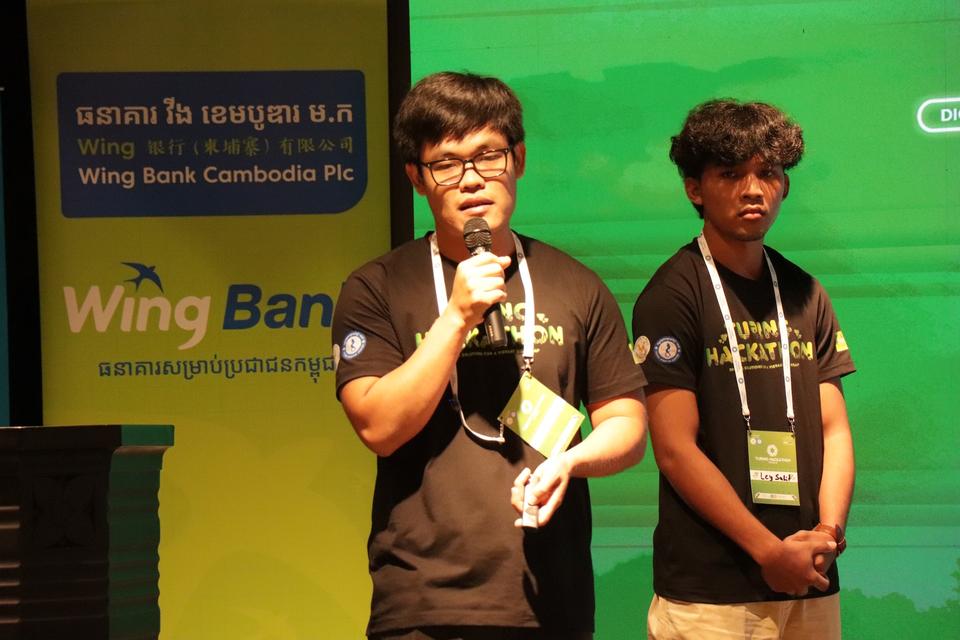
Meanwhile, contestant Ley Salit, a student of Journeys Within Our Community (JWOC), called for increased business programmes like hackathons so that Siem Reap youths have more opportunities to develop the local economy in the future.
“Many young people in Siem Reap don't have many opportunities to participate in this kind of big business event to expand their ideas. We usually only have workshops or sit and listen to people, but the hackathon requires us to apply critical thinking to come up with innovative ideas for a start-up,” he said.
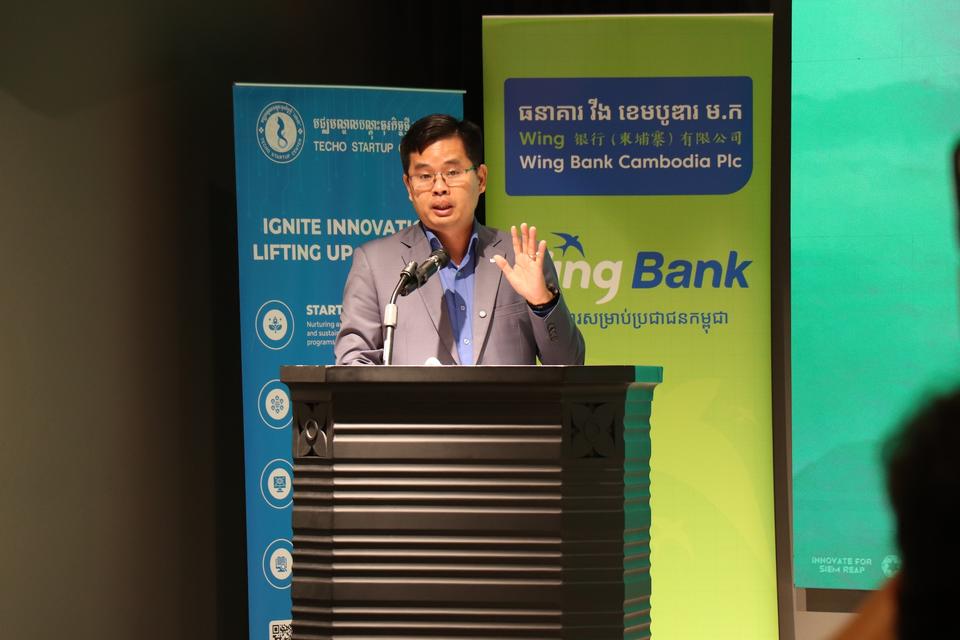
Hor Bunthe, Deputy Chief Executive Officer of Wing Bank, was amazed how Cambodians in their early 20s were capable of addressing critical challenges in their community and pitch their ideas within five minutes in the final round of the Turing Hackathon Cycle 9.
“Tourism is facing challenges now. But as a so-called industry without air pollution, tourism in Siem Reap has a very strong growth potential, with our youths proposing innovative ideas that benefit citizens, particularly businesses and tourists through digital advancements,” he said.
This article was originally reported by Kiripost. Read the full story here.

 Support