

 Exchange Rate
 Chat to Support

 ភាសាខ្មែរ


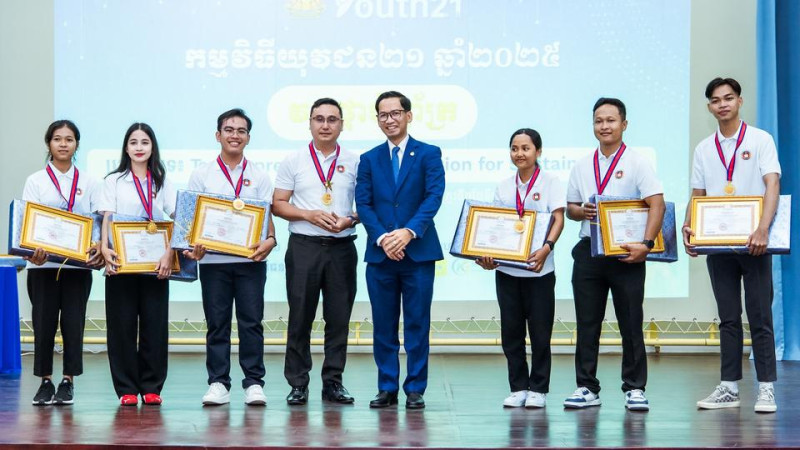
The innovation is aimed at providing trusted information on pregnancy and pregnancy health check reminders after learning that 42.4 percent of women missed at least one prenatal visit and 75 percent encountered false advice online. It also aims to cut down maternal mortality, which stands at 154 per 100,000 live births in Cambodia, among the highest in Asia-Pacific
A group of six Cambodian health students are redefining maternal care through “MEADA”, a Khmer-language chatbot that provides trusted pregnancy information and reminders to expectant mothers across the country. Seeing mothers struggle through unsafe pregnancies became the driving force of the team’s mission to create a digital maternal health guide for Cambodian women.
El Lita, studying a Bachelor's degree in midwifery, maternal and child health from the Health Science Institute of the Royal Cambodian Armed Forces, said she joined the competition because “Youth 21” is a great programme that offers opportunities for university students of various disciplines to acquire an entrepreneurial mindset. Although she was in the health sector, she was curious about entrepreneurship.
The Silent Struggles Women Endure
Her team came up with a chatbot called MEADA, which means “Mother” in Khmer, to address issues faced by Cambodian women. They focused on pregnant women who lacked access to trusted information about maternal health having seen widespread disinformation and misinformation about pregnancy health on social media. She said this could harm the health of pregnant women and infants in the womb.
“We see that pregnant women are the people who most likely have the hardest time. Born as a woman, she faces difficulty even before she is pregnant because she has to endure menstruation every month. Men would never understand this pain felt by women,” Lita said, explaining why her team chose this project topic.
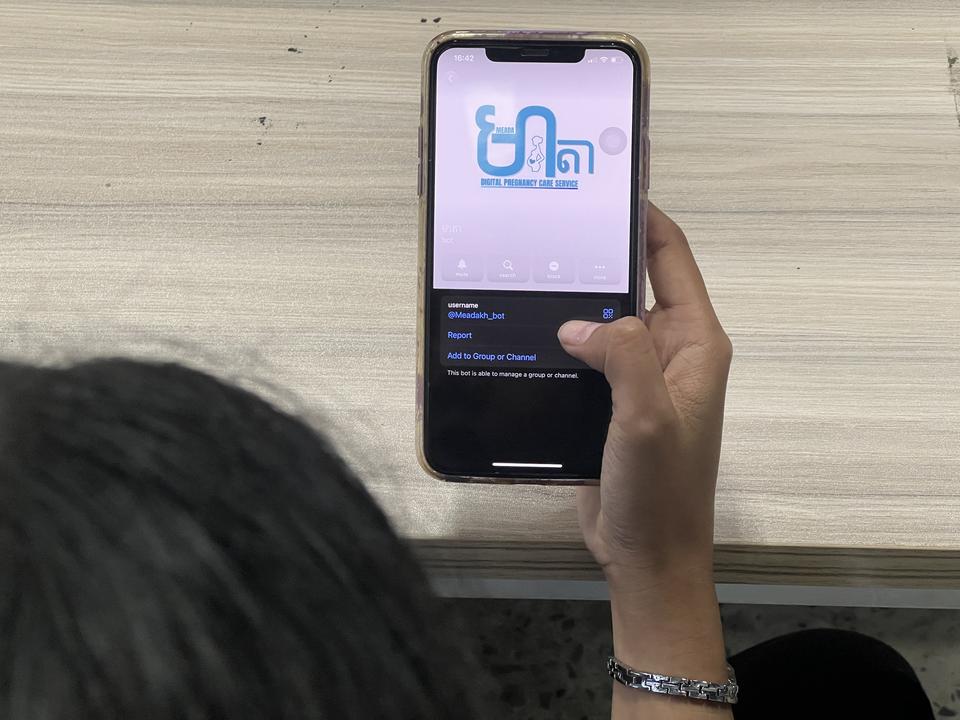
Trusted information from WHO and Health Ministry
The team established the smart digital chatbot on Telegram to provide timely and trusted information about maternal health care tips with functions to respond to any concern and symptoms during pregnancy.
The advice is provided by professional health experts in maternal health, while also helping women track period cycles, pregnancy prediction and the age of the fetus in the womb. Another special function of MEADA is alerting pregnant women about their hospital check-ups.
To ensure that all the information and recommendations given by the chatbot is trustworthy, they are sourced from trusted institutions like the World Health Organisation, Self Motherhood book by the Ministry of Health and other health experts.
The survey pointed out that nearly 87 percent of the surveyed women said they are interested in online consultation and discussion with doctors through digital methods in Khmer language. In addition, about 72 percent expressed interest in MEADA being free on Telegram for better access to maternal healthcare information.
That said, Lita urged pregnant women to go for regular pregnancy check-ups so that they can treat health problems in time to lower the medical risks during pregnancy and childbirth.
Team leader Heang Lyhorng, a year-five student majoring in general medicine at the Health Science Institute of RCAF, said the survey showed that language barrier made it difficult for the women to access information about maternal healthcare.
This inspired the team to create MEADA for pregnant women, including the public, so that they gain better understanding any time without having to spend time looking for details on the internet or becoming misinformed on social media.
“We found out that most of the information on the internet about health-related topics is mainly in English and has technical words which are hard for pregnant women in Cambodia to understand. That’s why we created a Khmer language chatbot which can be accessed anywhere,” he said.
Cambodia’s maternal mortality ratio at 154 per 100,000 live births is higher than the average of 113 in Asia Pacific. “Contributing factors vary across different provinces, with gaps in healthcare seeking behaviours, limited infrastructure, limited life-saving skills, limited access to timely referral, and access to essential resources playing key roles,” Dr. Bin Sakviseth, a neonatologist at Calmette Hospital, said earlier this year.
Noting that the figure is comparatively higher than other countries, Lyhorng said by establishing MEADA, they hope to help the Health Ministry achieve its 2030 goal by reducing the mortality rate to 70 in 100,000 live births.
From health to entrepreneurship: Youth 21 empowersCambodian students
Meanwhile, Lyhorng remarked, “Joining the Youth 21 programme is more than a competition. I gained new entrepreneurial skills, soft skills and was able to network with 10 other university students during our training in Siem Reap.”
After winning first place in the competition, the team wants to turn their chatbot into a business venture in the future if they can secure more funds. Since the launch of the prototype, MEADA has more than 500 subscribers, 78 percent of them pregnant women and the rest comprising men who want to expand their knowledge about maternal health care.
Keng Virak, 40, team MEADA’s mentor, said he encouraged the students to participate in this competition because the programme was a good opportunity for healthcare students to develop an entrepreneurial mindset and soft skills, such as public speaking.
The students designed the chatbot to align with two UN sustainable development goals (SDG)—SDG3 to ensure healthy lives and wellbeing for all and SDG4 which focuses on inclusive and equitable quality education and lifelong learning.
“I think Youth 21 is such a great programme. I have brought students to participate in it for three years now. It focuses on youths and I think whenever we start to care about youths, it will help develop our country,” he said.
Virak is proud and delighted to guide and mentor six youths to innovate their ideas into useful digital tools that can address the mortality rate of mothers and children in Cambodia.
Theng Senghong, media head for Youth 21, told Kiripost that the programme was introduced by Education, Youth and Sports Minister Hangchuon Naron in 2021 for students to nurture a business mindset in line with essential skills in the 21st century to help them in their future.
Youth 21 has trained hundreds of young Cambodian students from various universities entrepreneurship skills between 2021 and 2025 to develop innovative ways to address social issues through combining critical thinking and digital skills.
“We encourage youths to try something new through the programmes designed by the education department to keep up with the modern world. Hopefully more youths can participate in this kind of programme,” he said.
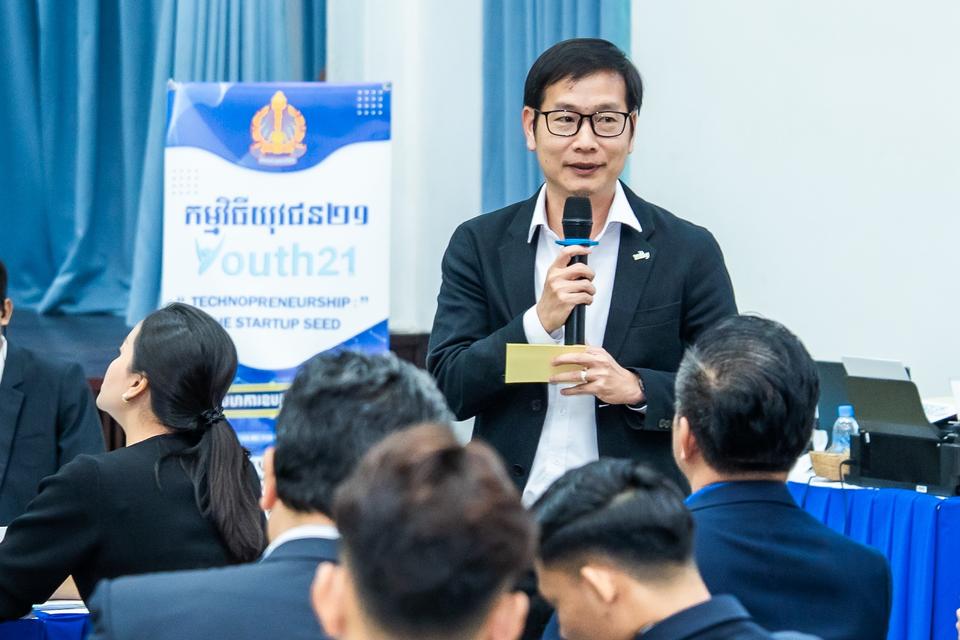
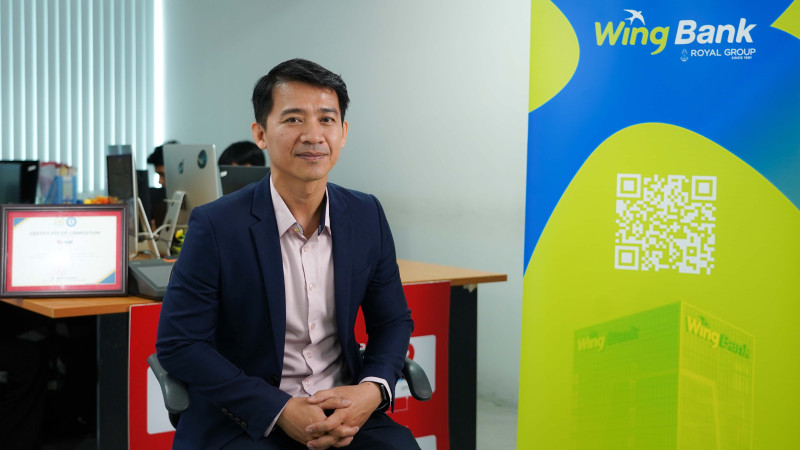
Chiv Dara, Chief Financial Officer of Wing Bank, who served as a judge at the final competition, said, “The future of Cambodia lies in the creativity, courage, and determination of our youth. Therefore, we must give them the tools, guidance, and opportunities to turn visions into reality.”
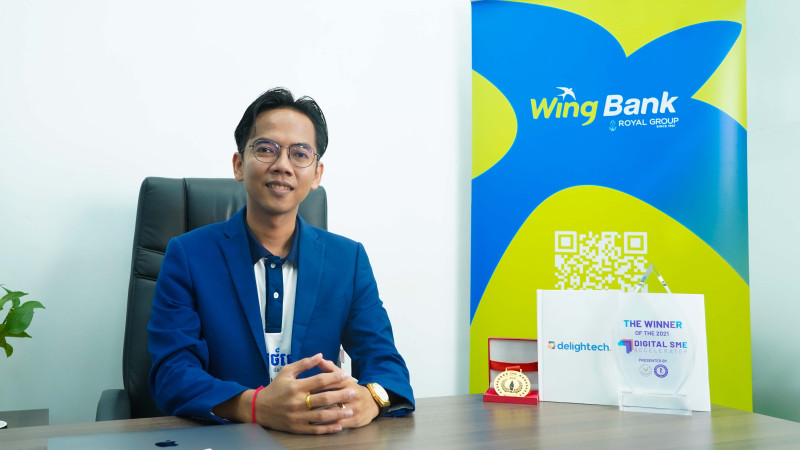
Since 2021, Wing Bank has been a regular partner of Youth 21, supporting hundreds of students in sharpening their entrepreneurial skills and preparing for future challenges. The Bank actively participates as mentors, trainers, and evaluators to ensure students gain real-world knowledge, practical business skills, and the confidence to pursue entrepreneurship.
This article was originally reported by Kiripost. Read the full story here.

 Support