


 Exchange Rate
 Chat to Support
 ភាសាខ្មែរ


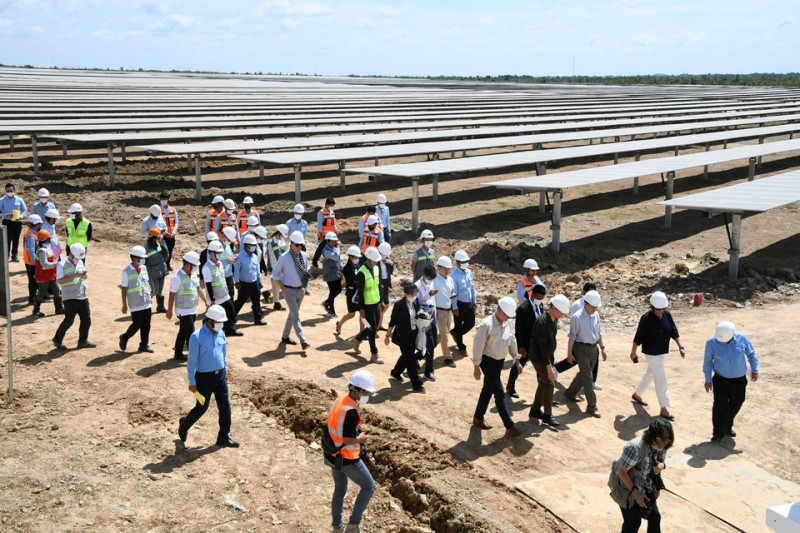
The Association of Banks in Cambodia (ABC) is working to support the country’s financial sector for sustainable development through the Cambodian Sustainable Finance Initiative (CSFI), a framework that aligns banking practices with environmental and social safeguards.
Sok Chan, Head of Financial Inclusion and Public Relations of ABC, said Cambodia’s push into sustainable finance is helping lenders manage risk, but challenges remain in scaling up green lending.
The CSFI is the result of a two-year rigorous development process. The initiative represents a collaborative milestone led by the ABC, with key support from the National Bank of Cambodia and the Ministry of Environment.
The CSFI, launched by ABC in 2016, laid the groundwork for the Cambodia Sustainable Finance Principles (CSFP) in 2019 which is a voluntary framework of nine principles to guide banks to factor in environmental, social and governance (ESG) risks in lending and investment decisions.
While there was no single mandatory ESG standard in banks, Chan said many have developed internal ESG policies aligned with international frameworks, and using the CSFP as a guide to manage risks.
At its core, the CSFI commits participating banks to balancing economic growth with the protection of Cambodia’s environment and cultural heritage. Banks have pledged to actively assess and mitigate risks related to climate change, pollution, and waste management.
“The framework helps banks strengthen risk assessments and spot potential environmental and social harm early. This reduces exposure to high-risk projects and supports the development of green financial products aligned with national and global sustainability goals,” Chan said.
The CSFI wants the banking sector to be a model for the Mekong region and Southeast Asia, a signal to international investors of its commitment to global best practices and sustainable development.
Barriers to green lending
Despite progress, there are constraints that are slowing the growth of green finance.
Banks still face limited technical capacity, particularly in assessing new technologies and ESG risks. There is also no consistent definition of what qualifies as “green finance”, and reliable ESG data from clients remains scarce.
Chan said the recent launch of a sustainable finance taxonomy by the National Bank of Cambodia (NBC) aims to address this by providing clearer classification and improving reporting consistency.
Demand is another issue, as many businesses have low awareness of green finance, and there are relatively few bankable green projects that meet lending requirements.
“Green projects can also carry higher perceived risks. These include uncertain returns, regulatory gaps and longer payback periods, making banks more cautious compared to traditional lending,” he said.
A lack of incentives further limits growth. Chan points to the need for stronger government support, including tax breaks, concessional finance and credit guarantees, to make green projects more attractive.
Translating commitments into action
Financial institutions are beginning to turn green finance commitments into practical solutions.
Wing Bank, in collaboration with the Ministry of Agriculture, Forestry, and Fisheries, and supported by the Global Environment Facility through the International Fund for Agricultural Development, has launched a financing initiative to accelerate the adoption of climate resilient technologies across Cambodia’s agri value chain as climate change increasingly threatens productivity.
The programme offers collateral-free loans of up to $200,000 to farmers, agricultural cooperatives, and agribusinesses. It is being rolled out across five provinces including Prey Veng, Takeo, Kampong Thom, Kampong Chhnang, and Battambang, providing accessible financing at competitive rates.
Wing Bank has committed $3 million to the initiative, with repayment terms of up to 36 months and no approval fees.
The financing supports investments in climate-resilient technologies such as smart irrigation, drying and storage systems, integrated farming models, and renewable energy applications. These are expected to reduce costs, improve productivity, and strengthen post-harvest capacity.
“Cambodia’s future depends on how quickly we embrace climate-resilient agriculture and green finance,” said Thysen Som, Chief Public Banking Officer of Wing Bank. “By expanding access to capital for green technologies, we are supporting livelihoods, strengthening food security, and contributing to a more resilient economy.”
To support implementation, on-ground workshops were conducted across the five provinces in March 2026, providing guidance on loan applications and training on climate-smart farming techniques.
Strengthening the sector
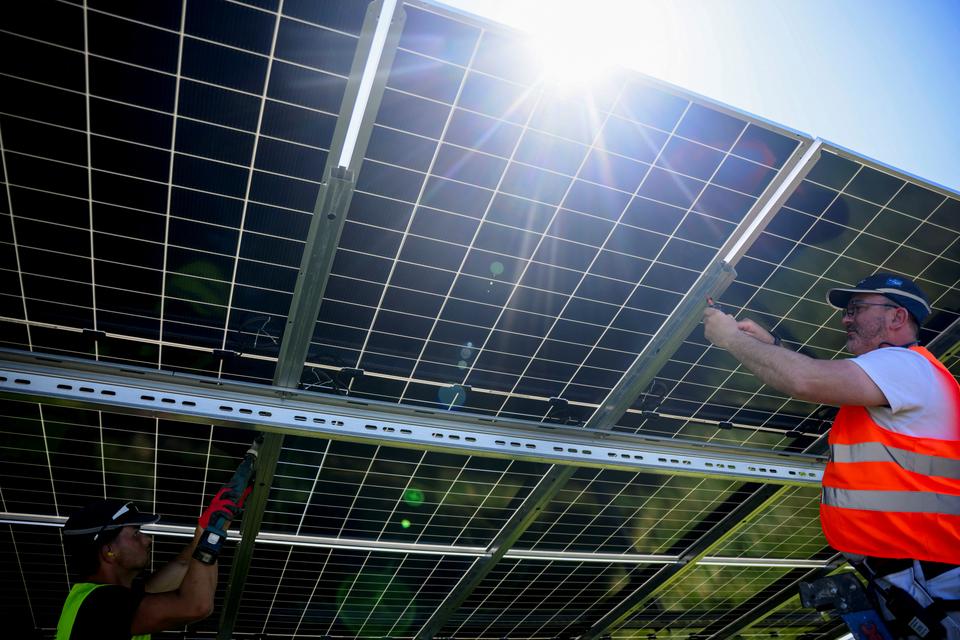
The Asian Development Bank (ADB) okayed a $50 million policy-based loan recently to strengthen the financial sector, supporting banking and nonbanking institutions, as well as digital finance infrastructure and sustainable finance capacity. A $82.5 million initiative to support energy transition was also approved.
Anthony Gill, ADB Acting Country Director for Cambodia, said the country’s development path is anchored in its ambition to become an upper-middle-income nation by 2030 and a high-income country by 2050.
“Through this investment, ADB is supporting Cambodia in strengthening its financial sector, laying the foundation for resilient growth, expanding financial inclusion, and unlocking private sector potential,” he said.
“By fostering a dynamic and inclusive financial ecosystem, we aim to empower businesses, attract investment, and ensure that prosperity reaches all segments of society.”
Keav Thida, founder of SOGE Solar, said the banking sector has started to recognise the importance of green finance initiatives. While her company has not applied for green financing from banks yet, it has received funding from climate-focused projects that could be considered a form of green finance.
“While I recognise the potential of green finance for my business, I am not ready to apply for this financial support,” she said. “However, I am interested and open to future opportunities.”
She suggested that more accessible green finance, such as loans with interest rates below six percent per annum and minimal collateral requirements, could significantly benefit businesses, communities, and the broader economy.
“This kind of financial support would accelerate green business development, positively impact the environment, and contribute to long-term economic growth,” she added.
Green finance programmes
Khwai Atthia, spokesperson for the Ministry of Environment, said Cambodia established the National Policy on Green Development and National Strategy on Green Development (2013–2030) to promote sustainable growth. These frameworks aim to create green business opportunities, foster a low-carbon economy, and enhance social well-being.
He noted that the green economic development aligns with the Pentagonal Strategy and is guided by national policies as well as international frameworks.
“The Ministry of Environment has introduced policies built around three core pillars: cleanliness, greenness, and sustainability to ensure environmental integrity, address climate change, and promote green economic growth,” Atthia said. “The goal is to transform Cambodia into a high-income and carbon-neutral country by 2050.”
Key priorities include expanding clean energy and promoting green investment. Cambodia has reduced its reliance on coal and is increasingly investing in electricity generation from liquefied natural gas (LNG), biomass, and renewable sources such as solar and hydropower.
“Green finance programs for various projects are being implemented,” he added. “There is also a strong focus on green agriculture and industry, promoting environmentally friendly production and improved waste management.”
Atthia emphasised that green economic development is critical for sustaining national growth while ensuring environmental protection, efficient resource use, and social inclusion.
“Green development supports responsible growth without compromising the needs of future generations,” he said.
The country’s green finance framework is designed to channel investment into environmentally sustainable projects, strengthen economic resilience, and reduce environmental impact. The NBC has also introduced financial system measures to enhance transparency and prevent greenwashing.
Cambodia’s broader green development agenda focuses on low-carbon growth, resource efficiency, and social equity. The country is investing in clean energy, promoting green agriculture and ecotourism, and strengthening sustainable finance mechanisms to achieve carbon neutrality by 2050.
Balancing profit and sustainability
ABC views green finance as a business opportunity rather than a constraint.
Banks are expanding into sectors such as renewable energy, energy efficiency, sustainable agriculture and green buildings, which offer long-term lending potential.
At the same time, integrating ESG criteria helps reduce financial risks, including defaults, regulatory penalties and reputational damage.
ABC is also working with international partners, including the International Finance Corporation, Asian Development Bank and Global Green Growth Institute, to strengthen capacity and develop sustainable finance frameworks.



 Support