


 Exchange Rate
 Chat to Support
 ភាសាខ្មែរ


In November 2023, the Cambodian Banking Association (ABC) and the Cambodian Microfinance Association (CMA), with the support of the National Bank of Cambodia (NBC), developed the industry’s common credit contract standards for loans under $50,000, as well as a standard credit contract for loans under $100,000.
“The aim was to make it easier for customers to understand the terms and conditions of credit contracts, their rights and benefits by making the credit contract standards simple, transparent and easy to understand, while protecting customers when they use financial services,” Sok Chan, Head of Financial Inclusion and Public Relations at ABC, said.
He added that the industry’s common credit contract standards help increase customer trust in the banking system and reduce disputes related to the use of financial services.
Starting in 2023, all loans under $50,000 from banks and financial institutions use a single loan agreement, which is only four to five pages long. Chan said this is convenient for customers and easier to understand. However, customers should still read all points of the loan agreement.
He recommended that customers who cannot read or have difficulty understanding the terms, should ask a loan officer to read and explain the agreement in detail before signing or giving a thumb print.
“Before deciding to sign or give a thumb impression on the loan agreement, it is important for customers to carefully review the loan terms and conditions, especially the interest rate, penalty rate, early repayment terms and conditions, and other service fees,” he said.
Nget Chou, an economic analyst and investment expert, said accessing loans from banks or microfinance institutions requires careful study. Loan repayment, loan size and loan terms are all directly affected by monthly payments, which include both interest and principal.
“Profits are divided daily and monthly. Typically, loans do not exceed 50 to 60 percent of the borrower’s income, leaving room for living expenses to ensure repayment capacity,” he said.
Before taking a loan, borrowers should carefully study and compare loan amounts, interest rates and collateral requirements, such as legal land titles, as well as conditions and penalties for early repayment.
“Institutions often have strict policies. Borrowers should pay close attention to clauses on early repayment, as these usually involve penalties,” he said.
Chou also said borrowers should prepare emergency savings equivalent to at least six months of expenses before taking a loan. He noted that many borrowers overlook this step and instead borrow beyond their needs, leaving themselves vulnerable to financial shocks.
Borrowers should also be aware of administrative fees charged after loan approval, as well as penalties for late payments or early contract termination.
Chou added that borrowers should review their credit history with Credit Bureau Cambodia (CBC), whether positive or negative, and use this information to compare institutions offering competitive interest rates. Cambodia’s free market offers a wide range of banks and microfinance institutions with different interest rates and policies.
“Before taking a loan, borrowers should compare at least four to five financial institutions. They must look at interest rates, conditions, penalties, repayment terms and administrative fees. Interest should be negotiated between borrower and lender. Since demand for loans is relatively low, borrowers have bargaining power if they can demonstrate repayment capacity,” he said.
Chou warned that signing a loan contract without carefully reading it, or failing to check clauses related to property transfer, carries significant risks. However, borrowing from licensed institutions reduces these risks.
“Financial institutions are responsible for managing collateral, and property can only be seized through a court ruling that authorises its sale to repay creditors. Borrowing from a licensed institution with a valid contract, in accordance with legal procedures, ensures that borrowers do not face the risk of losing property unlawfully,” he said.
The NBC issued a proclamation on the ceiling of lending interest rates in March 2017 to protect customers from being charged excessively high interest rates and to promote efficient use of credit.
The proclamation applies to deposit-taking microfinance institutions, microfinance institutions and rural credit operations under the guardianship of the NBC. It sets the lending interest rate at no more than 18 percent per year for all credit facilities. However, the average lending interest rate from banking institutions is about 10 percent per year.
ABC’s Chan said that in general, contracts, whether oral or written, are legally valid. However, in the banking sector, a written contract, signature and thumb impression are required to confirm agreements between customers and financial institutions.
If a dispute arises, a written contract provides the legal basis and evidence to confirm the agreement between the parties. It also clearly defines the obligations of customers as debtors and the obligations of banking institutions. Both sides must comply with the terms stated in the credit contract.
Customers have the right to file a complaint with the ABC or the Financial Consumer Centre (FCC) at 015 365 222 if they believe a banking institution is charging interest rates above the legal limit. They may also contact the ABC or the CMA with credit documents for verification or raise concerns through the National Bank of Cambodia hotline.
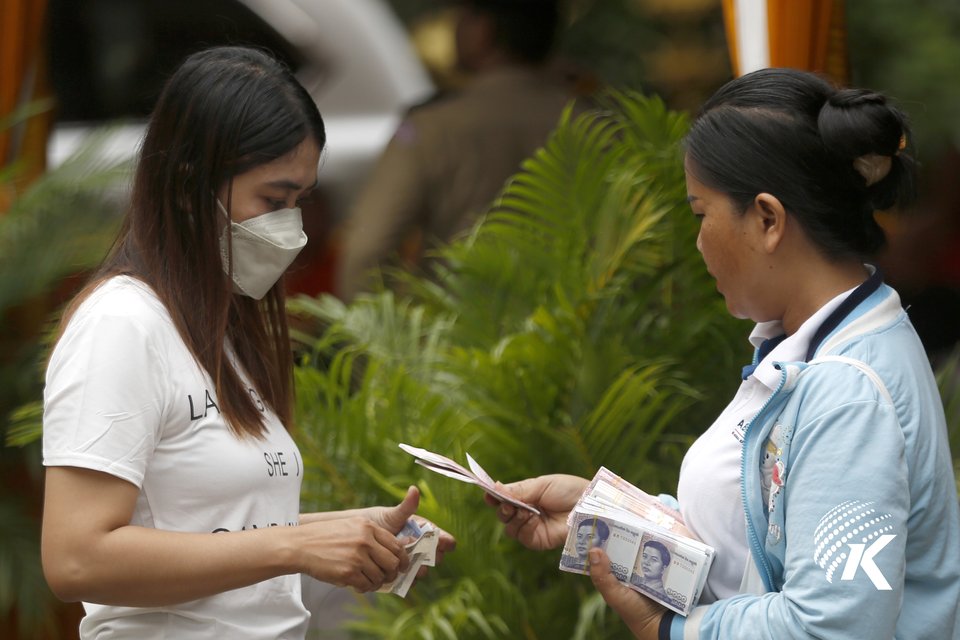
Besides this, CBC also said a credit report is a valuable tool for borrowers to understand their financial health.
“By checking their personal credit report frequently, individuals can see their repayment history, existing loan status and overall credit standing before they walk into the bank or take on new financial commitments,” CBC said.
“This allows them to know where they stand, spot inaccuracies early and understand how lenders view their profile.”
When borrowers understand their credit information, they can approach financial institutions with confidence, compare loan offers more realistically and negotiate better loan conditions.
“A credit report is not just a tool for banks. It is also a financial mirror for borrowers,” CBC said.
Committed to Responsible Financial Services
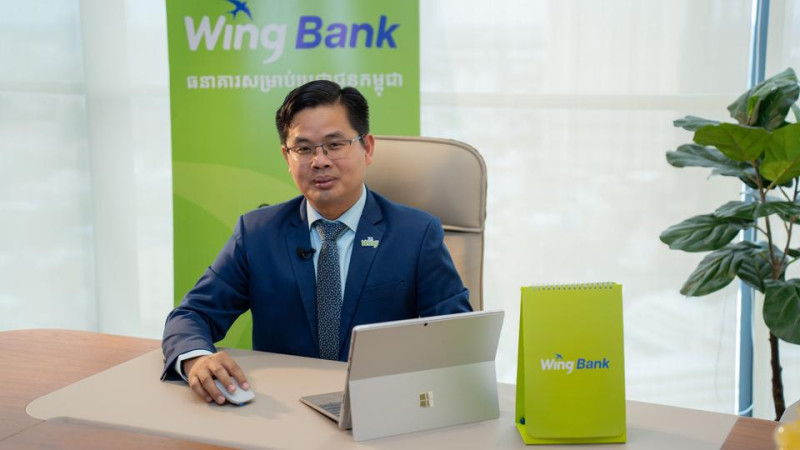
Wing Bank has reiterated its commitment to transparent, responsible, and customerfocused lending, emphasizing that all loan procedures fully comply with the National Bank of Cambodia’s regulations.
The bank states that its credit officers are trained to provide clear and thorough consultations, ensuring customers understand available financial products and can choose solutions that best meet their needs.
Wing Bank offers a diverse portfolio of loan products designed to support both everyday customers and growing businesses. Homebuyers can benefit from housing loans with interest rates starting from 7.5% per year, while car buyers can access financing for up to 90% of a vehicle’s value. For those seeking twowheel mobility, motorbike loans are available for up to 100% of the purchase price.
In addition, the bank provides tailored financing solutions for SMEs and corporate clients, helping businesses strengthen their operations and expand with confidence.
“We utilize the K-Score system and a comprehensive set of additional metrics to guide and enhance our loan decision-making process,” said Bunthe Hor, Deputy CEO of Wing Bank. “Our goal is to deliver financial services that genuinely improve the lives of people and communities. We offer a wide range of loan products and strictly follow regulations to ensure customers receive real benefits.”
Wing Bank adds that fairness, transparency, and responsible lending remain central to its mission of supporting economic growth and promoting financial inclusion in Cambodia.
What is a K-Score?
In Cambodia, a credit score is known as a Khmer Score, or K-Score. It is a number that measures a person’s likelihood of timely repayment based on past credit activities.
The score is generated from an individual’s credit report and reflects repayment history and existing loan obligations. CBC noted that higher K-Score indicates lower risk of the borrower to lenders, which can positively contribute to the loan application assessment of the borrower.
On the other hand, a lower K-Score signals higher risk associated with a borrower based on their credit history.
Lenders use the K-Score alongside other information to assess loan applications and determine conditions such as interest rates, loan amounts and repayment terms.
How CBC data helps prevent over-borrowing
CBC data provides a complete view of an individual’s credit situation. For lenders, it helps assess risk and repayment capacity. For borrowers, it allows them to see outstanding loans and repayment history across institutions.
Every Cambodian citizen is entitled to one free credit report a year when requesting directly from CBC. Borrowers can also subscribe to CBC mobile services to receive alerts about changes in their credit profile, CBC told Kiripost.
“K-Score indicates the creditworthiness of individuals as borrowers. Lenders tend to have more confidence in borrowers with higher K-Score,” CBC said.
When borrowers understand their credit history, they can speak to loan officers with clarity and confidence. This allows them to explain their situation accurately, assess loan offers properly and focus on improving their credit profile rather than questioning rejections.
CBC said credit reports reflect both past and current repayment behaviour. Reviewing them allows borrowers to correct mistakes before applying for loans and ensure lenders see an accurate picture of their creditworthiness.
Positive credit information remains on a report for up to 10 years, while negative information is retained for three years after a loan is fully repaid. Borrowers can also review the last 24 payment cycles.
CBC said it does not decide who can borrow, but provides tools that help consumers monitor financial commitments and avoid over-indebtedness.
“With this clear view of their borrowing, consumers can understand how much they have already borrowed and how much they can realistically afford to repay. This insight helps them avoid over-indebtedness and make more informed, responsible borrowing decisions.”
Borrowers can access their credit information through CBC Mobile, authorised agents and partner mobile banking applications. This helps them understand how much they have borrowed and what they can realistically afford to repay.
If consumers find inaccurate information on their credit report, they can file a dispute to CBC through its website or contact customer service to have the issue reviewed and corrected. Taking these steps helps individuals maintain a strong and accurate credit profile, giving them confidence and control over their financial decisions.



 Support