

 Exchange Rate
 Chat to Support

 ភាសាខ្មែរ


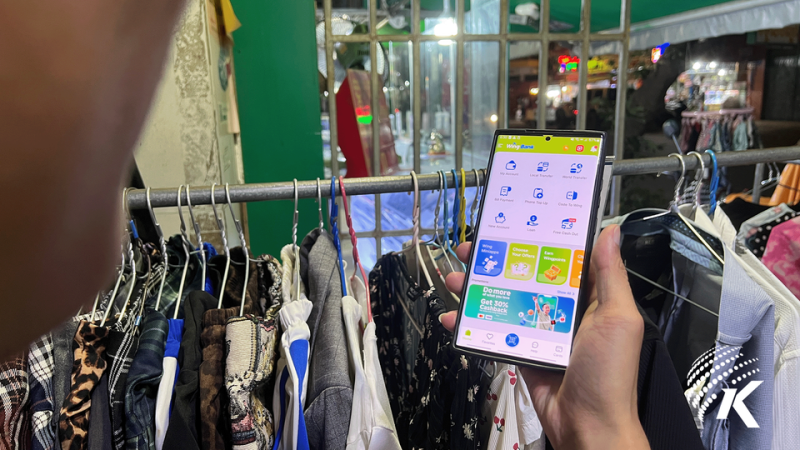
While the world is entering a digital age, Cambodia is also moving toward digital systems in many areas, including payments. In some of the provinces, farmers have begun using mobile banking platforms to send and receive money. Despite limited digital literacy, some describe mobile banking as simple to use and say it helps save time.
As Cambodia pushes toward financial inclusion, new data from the National Bank of Cambodia (NBC) shows that the country recorded 8.3 million deposit accounts and over 58,000 point-of-sale terminals by mid 2025. With 2,925 ATMs now operating nationwide, and growing access to mobile banking platforms, digital transactions are gradually reaching more Cambodians in both cities and provinces.
The agricultural sector, which accounts for just 0.6 percent of total credit, according to the report, there are signs of gradual digital adoption. Farmers interviewed by Kiripost in Takeo, and Kampong Cham provinces said mobile banking has made payments easier, though limited digital literacy remains a barrier.
From cash to clicks
As Cambodia edges deeper into the digital age, the quiet rhythm of rural life is also changing, one phone tap at a time. In provinces long driven by cash and face-to-face exchanges, some farmers are beginning to shift toward mobile banking, finding “new ways” to send, receive, and save money.
Pheuk Run, 48, a farmer in Takeo province, used to rely solely on cash for payments. Now, with help from his child, he has learned to use mobile banking, by “clicking” to send and receive money. It has been two years since he started using it.
“It's easy and very fast,” he said, explaining that “just a few clicks replace time spent travelling to markets or banks”.
Similar experiences are shared by farmers in Kampong Chham, who are experimenting with digital transactions despite limited experience with smartphones or online systems.
Another rice farmer in Kampong Cham, Meas Sokny, 45, said although it was difficult for her to adapt to digital payments at first, she learned how from her daughter, who is attending university. Sokny now uses mobile banking to transfer money and support her daughter’s studies.
“It saves time,” she said, adding that as a farmer, she does not have much time to make physical payments. Using her phone makes it easy to transfer money.
As farmers begin receiving their benefits through digital wallets, Sokny said the experience has been smooth and convenient. She added that she now plans to encourage her neighbors to start using the service as well.
The government’s ‘FinTech Development Policy 2023–2028’ aims to boost financial literacy inclusion by expanding access to financial technology, including rural areas, for farmers and small businesses. The policy encourages collaboration between banks, telecommunication companies, and local financial service providers.
NBC’s 2024 report also highlighted that mobile-banking transactions continue to “grow faster” with the rise in smartphone use and spread of QR code payments contributing to the trend.
With the digital payment system, NBC has introduced to improve financial inclusion, modernize the payment system, and promote the use of the national currency which includes the key reasons such as making payments faster, cheaper, and more secure, linking different banks and financial institutions. Also the digital payment expects to provide easier access to financial services for all. The development also helps integrate Cambodia into regional digital economies and reduces reliance on physical cash.
A Mobile App that Drives 100+ Digital Solutions
Wing Bank is transforming Cambodia’s digital banking landscape with its flagship Wing Bank App, a platform that delivers more than 100 innovative financial solutions—all accessible through a smartphone. From loans and deposits to money transfers, utility and insurance payments, supply chain transactions, payroll services, phone top-ups, goal-saving features, bancassurance, and digital loans, the app offers a fast, secure, and convenient experience tailored to modern financial needs.
Users also enjoy free cash-out services from their Wing Bank accounts at over 12,000 Wing Bank Agents nationwide, ensuring financial inclusion across the country. Thanks to Bakong KHQR, customers can send and receive money across banks free of charge and make payments to merchants—including restaurants, cafés, marts, and more— whose banks are members of Bakong. This integration brings unmatched convenience and safety to everyday transactions.
Thanks to its strong global partnerships with leading international money transfer providers—including MoneyGram, GME Remittance, Ria, Japan Money Express, and many others—Wing Bank enables users to send and receive money from over 200 countries and territories worldwide.
This service has been a lifeline for thousands of Cambodians working abroad, particularly in South Korea and Japan, allowing them to transfer their hard-earned income back home quickly and securely—even to family members living in remote villages.
“The Wing Bank App is designed to make everyday life easier—whether you’re paying bills, transferring money, or saving for your goals, everything is just a few taps away,” added Bunthe Hor, Deputy CEO of Wing Bank.
Wing Bank’s commitment to security remains uncompromising. The bank has earned the PCI DSS v4.0.1 certification, effective June 30, 2025, marking its third consecutive year of compliance with this globally recognized framework. This certification confirms adherence to all 12 core requirements, significantly strengthening defenses against fraud and card data breaches. The upgrade to version 4.0 demonstrates Wing Bank’s proactive approach to emerging threats and technologies, enabling innovative, customizable methods to safeguard customer transactions.
With cutting-edge solutions and world-class security, Wing Bank continues to empower Cambodians with confidence and convenience in every transaction.
Promoting Digital Literacy for Safer Mobile Banking
Mobile banking is opening doors for farmers by providing simple, time-saving ways to send and receive money. While many users are still at an early stage of digital literacy, efforts are underway to strengthen their confidence and skills.
To bridge this gap, the National Bank of Cambodia (NBC) is working closely with stakeholders to promote digital literacy nationwide. Sok Chan, Financial Inclusion Head at the Association of Banks in Cambodia (ABC), shared that under NBC’s guidance, ABC is collaborating with partners—including the media—to raise awareness and educate users. Through targeted financial education campaigns in both urban and rural areas, the goal is to equip people with the knowledge they need to protect themselves online and make the most of digital tools.
ABC also reminds users to stay vigilant when making digital transactions. “To avoid being hacked, users should never share their identification number, birthdate, password, or PIN on social media. Always respond to security questions from your financial institution for identity verification,” Sok Chan advised.
NBC also previously warned people about issues of digital safety to protect their personal information after reports of scams on Telegram, Facebook, TikTok, and phone calls. Fraudsters have tricked people by using social media accounts of friends, relatives, or managers, pretending to borrow money.
This article was originally reported by Kiripost. Read the full story here.


 Support