

 Exchange Rate
 Chat to Support

 ភាសាខ្មែរ


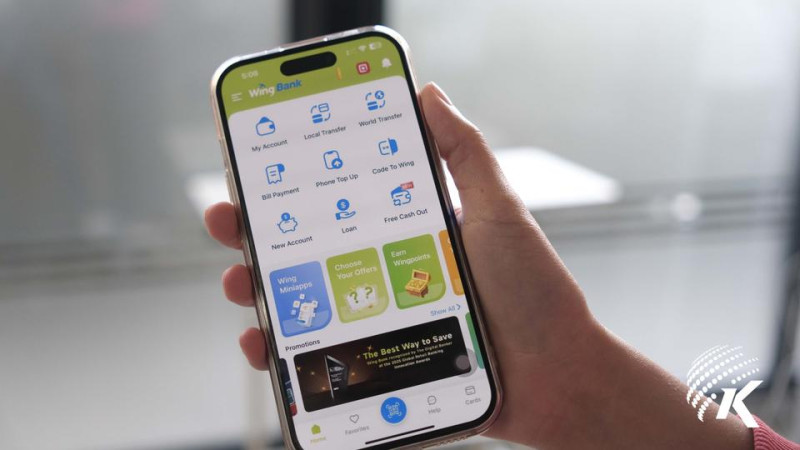
Cambodia's bank deposits are surging, growing by 14.5 percent in early 2025, and the secret sits in our pockets: digital banking apps, with platforms such as Wing Bank's Save for Goal are changing the way people manage money by turning vague intentions into clear targets.
According to a report by the National Bank of Cambodia (NBC), total assets rose by 7.3 percent to $97.1 billion during the first half of 2025, customer loans increased by 2.9 percent to $61.8 billion, while deposits surged by 14.5 percent to $61.5 billion, and capital expanded by 5.3 percent to $10.3 billion.
Sok Chan, Head of Financial Inclusion and Public Relations at the Association of Banks in Cambodia, explained the core cycle of money within the banking system. Deposits create interest for users and banks use those funds to provide loans for business expansion and other needs.
"The bank uses money from users who are not using it, to provide it to those who need it. It then generates [interest] from the loan to pay interest to those who deposited. Increased deposits and increased loans make economic cash flow smoothly," he said.
Chan noted that deposits involve more than just borrowing money, they also create responsibility for the bank to pay interest to its depositors. He added that when a bank has more capital, it can provide loans at slightly lower interest rates compared to capital borrowed from abroad.
He advised that if a user deposits in riel and the borrower takes out a loan in riel, the interest rate is often dramatically lower. This is because banks can access capital directly from NBC, which is more cost-effective than managing US dollar loans.
He confirmed that banks have their own strategies to promote saving among young people. These include creating attractive products, providing incentives such as good interest rates, offering easy account opening and conditions, and helping users create a savings plan or goal.
Chan said, "Saving money in formal banking and financial institutions contributes to a strong and stable banking system in Cambodia, and contributes to the development of the national economy. It also provides security for their savings and allows them to receive interest and other benefits."
Heng Sinath is a street vendor who uses Wing Bank to receives and savesaves money through bank account. She said the first thing she does is open her banking apps, keeping one account for daily expenses and the other for saving. Over the years, this has helped her to keep her goals in sight and her money secure.
“I always use Wing bank Bank App to receive money,” the 51-year-old said. “When my sales are high, I save around 50 percent. If it’s lower, I adjust. But saving always comes first.”
She has adopted digital savings tools to manage her finances. For her, saving is not about discipline alone, it’s about purpose. “If we don’t have a clear reason for saving, it won’t last long,” she said, adding that her recent goal was to buy a new phone, something she achieved by setting a clear target and sticking to it month-by-month.

The rise of goal-based savings
Across Cambodia, digital banking apps’ such as Wing Bank’s Save for Goal features are reshaping how millennials like Sinath think about money. These platforms combine higher interest rates of up to five percent per annum with goal-setting.
Wing Bank’s app allows users to save individually or in groups of up to 10 people, monitor progress in real time, and earn bonus interest when goals are achieved. Such features tap into behavioural psychology: the satisfaction of tracking progress, earning rewards and hitting milestones can encourage consistent saving habits.
“I think saving on digital apps is much easier. It’s easy, safe and I can track everything about my balance, my progress, and even how much interest I’ve earned. Some months, I save less because of emergencies, but I make up for it later. The point is to stay passionate about saving.”
Sinath sees this as important. “Saving in a bank is safer than keeping cash at home. At home, there’s no interest and it’s risky when we’re not there. With digital apps, I can monitor everything and if there’s an issue, I just call the bank.”
She also recognises that digital saving is a good economic benefit. “When we deposit money, banks can use it to provide loans that help businesses and keep the economy running. Saving at home just freezes the money,” she added.
Long Ousa, a local worker, told Kiripost that he opened a savings account with Wing Bank, even though he already had accounts elsewhere. His purpose was to save for a major purchase.
“I opened a Wing bank to save, and another bank account for spending,” he explained, adding that his goal was to save for a new motorcycle.
Ousa opened a separate bank account just for his savings, stating he keeps his savings for the future in it. This also helps him avoid spending from one banking application on his phone.
“I chose Wing, despite having other accounts because it is convenient and accessible. Wing is everywhere and it is easy to deposit and easily accessible,” he added.
Beyond apps, he joined Wing Bank’s Telegram channel to receive updates, financial tips, and reminders. Ousa added that it is easy to carry out transactions without having to go to the bank and create new spaces for financial learning and motivation.

Purpose-Driven Tools for Financial Growth
A representative shared that the Save for Goal feature was developed not just as a financial tool, but as a way to help Cambodians build meaningful relationships with their money.
“We understand that saving is deeply personal—it’s not just about numbers, it’s about dreams, security, and progress,” said Bunthe Hor, Deputy CEO. “By allowing users to set specific goals, track their journey, and celebrate milestones, we’re helping turn abstract intentions into achievable outcomes.”
The app includes a group-saving function and bonus interest incentives, designed to foster both individual discipline and community support. “We’ve seen that when people save with a goal in mind—whether it’s for a child’s education, a new home, or simply peace of mind—they’re more likely to stay committed,” he added.
In addition to goal-based savings, which offer interest rates of up to 5% annually, the platform also provides a current savings account with an annual interest rate of up to 3%, giving users a flexible and accessible way to grow their money while maintaining liquidity. This option is especially valuable for those who prefer traditional saving methods but still want to benefit from competitive returns.
“Digital tools like Save for Goal and our savings products are not just about convenience—they’re about inclusion. They help people take control of their financial future, contribute to national economic stability, and build habits that last a lifetime,” he added.
These initiatives strongly support the goals of Cambodia’s National Financial Inclusion Strategy 2019–2025, which aims to increase the use of formal financial services from 59% to 70% by 2025, while reducing the financial exclusion rate among women from 27% to 13%. By promoting savings, expanding access, and empowering consumers, these tools are helping turn policy ambitions into reality.
Digital Banking Needs Purpose, Not Just Access
The Founder and Chairman of F.I Vision Capital Plc, Ngeth Chou, emphasised the system-wide benefits of the digital shift. People can open accounts and transfer money easily, while it is also beneficial for the economy because people use less cash.
He added the bank's role in this process is that when people deposit money in the bank, it converts from physical to digital. The user holds the data, while the bank holds the money to operate effectively.
"A big intentional bank can use cash to provide loans to push the economy. The user simply saves, but the bank uses that money to fund lending and growth,” Chou said.
Despite the easy access, Chou pointed out that young people are often not motivated by interest rates that banks offer at around two to five percent. Instead, it is the convenience of banking apps that makes it easy to spend or save.
However, he added, “If the purpose is to save, they need to have good discipline. If not, they will spend it all."
Chou said that accessibility must be paired with knowledge, adding that saving is not automatic. To achieve it effectively, users need to be trained. He added that the key to success is setting clear personal financial goals for people to save for specific future needs, such as property, education, investment, retirement and emergencies.
He emphasised that without financial literacy, "it is hard to save". Therefore, banks must help by developing new products "to navigate them with tools to make it easy to save or easy spend easily with their application".




 Support