

 Exchange Rate
 Chat to Support

 ភាសាខ្មែរ


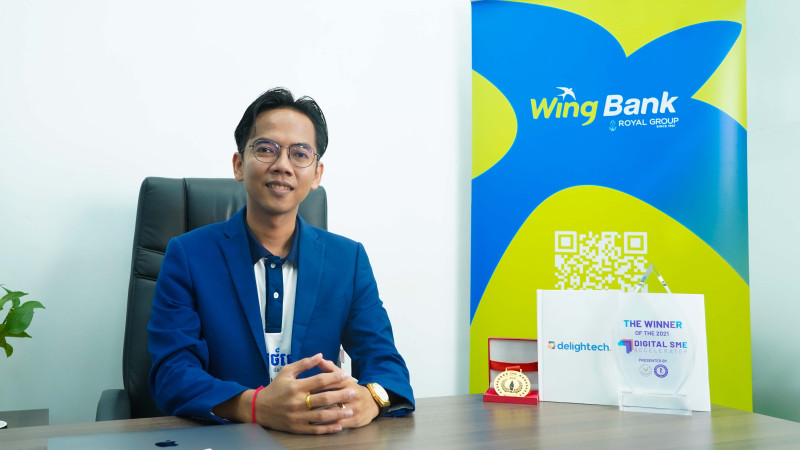
Lay Vila does not live like a typical FinTech CEO. For years, even as his company grew, he resisted upgrading his lifestyle. While others measured success in cars and property, Vila measured it on survival - whether his company could stay afloat another month, or survive the next setback.
“Many of my friends say, ‘You have a company, you have employees. You have money for people to borrow, why don’t you buy a new car and still drive a motorbike?’ I have heard repeated words for more than five years,” he told Kiripost.
“I have money, but I never dare to invest it in real estate. The money that I earn, I try to save for my company to survive.”
That mindset lies at the core of Delightech Co.,LTD, the Cambodian financial technology (FinTech) company Vila founded in 2018. Today, the firm specialises in digital lending and credit scoring through its proprietary platform, including its mobile application “LuyLeun”, which offers micro-loan ranging from $50 to $1,000.
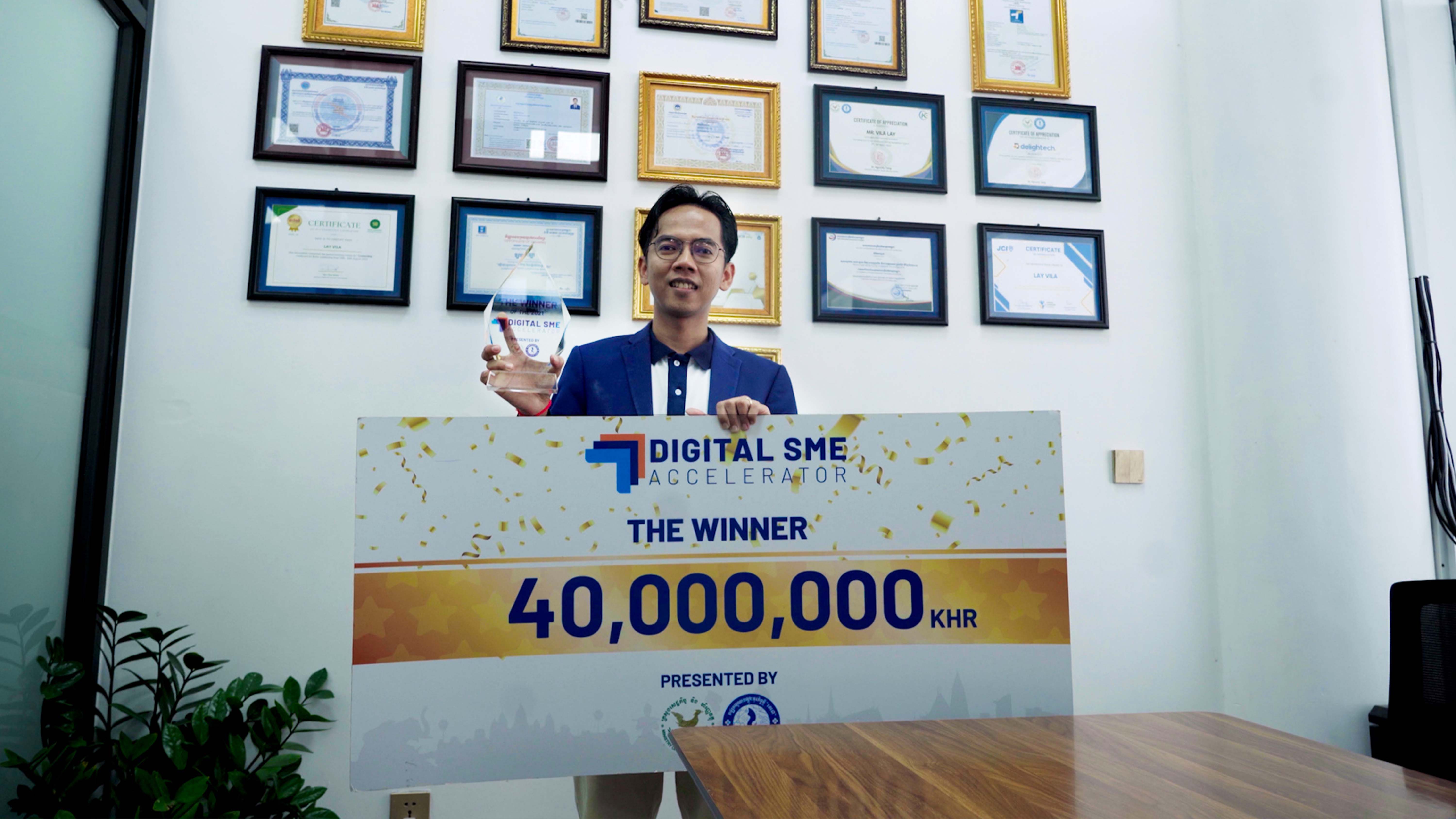
Despite major hurdles along the way, Vila’s dedication has seen Delightech grow into a leading digital player with more than 30 staff. Its progress was recognised in 2021, when it was named a winner of the Digital SME programme led by the Ministry of Economy and Finance and prepared by the Techo Startup Centre, with support from Wing Bank.
Taking a different path
After finishing high school in 2010, Vila studied law at Norton University before going on to complete a Master’s in business management. He entered the workforce in 2013, spending more than a decade in the financial sector, building experience in debt collection, relationship management and operational logistics for FinTech startups.
By the time he decided to quit to strike out on his own, Vila said he was earning more than he does today as CEO of his own company. Still, he chose to take the leap.
“I changed my mindset. Of course, if I have the mindset that if I make more money, I will still get more pay if I am ambitious. But because I wanted to grow, I decided to drop my salary and get less salary than I did before,” Vila said, adding that he set his initial monthly salary at $300.
“Mindset is the first thing I learned, and I always tell all my juniors, if we have a mindset we can change our future.”
When began building the business in 2018, Vila did not tell his family. Instead, he quietly saved, eventually investing $5,000 of his own money to get started. “It’s lucky I was born into a family who taught me how to save, and I had my personal budget before I left my old workplace,” he said.
As the third child in a family of government officers, Vila had long been determined to carve a different path to his siblings - and entrepreneurship offered that opportunity.
Building from the ground up
In its earliest days, Delightech was a small operation driven by a simple goal: to provide emergency capital to those in need, guided by a leadership philosophy of leading by example. Vila kept his salary low, focused on building networks, learning from mentors and reinvesting every dollar back into the business.
By 2021, the company was formally incorporated as Delightech Co., Ltd. That same year marked a turning point, as it began developing its fully digital lending platform, “LuyLeun”.
Today, the platform serves around 1,000 users each month, from SMEs to individual borrowers, with roughly 10,000 customers having used the service since its launch.
“We want to provide a professional service for them,” he said, stressing the company’s focus on building trust with its clients.
“For me, who used to work in the loan business, I see that I am not focusing on high or low interest, but I am talking about service and convenience. A good service that is fast and easy will cost money. There’s nothing good that is cheap. Good things are always expensive."
Recognition came early for the company when Delightech was among the winners in the Digital SME startup competition, sponsored by Wing bank.
Weathering crisis
Vila’s leadership was put to the test during Covid-19. Anticipating disruption, he instructed staff to take their computers home each day This decision proved critical when lockdown hit.
“It is lucky we prepared before the Covid lockdown. If we hadn’t prepared our staff before, our company would have collapsed and closed during that time. No clients, no budget for staff’s salary. The challenge was resolved because we had prepared.”
Even so, the company faced financial uncertainty, worsened by the post-pandemic economic downturn. At one point, Delightech was forced to shut down for three months, and some team members left.
“In that time we had to close operations for around three months. That time was hard. Some [staff] left me. For me, because I didn’t regret what I had done since 2021, as long as I don't give up, I can keep doing it, even when I encounter many things,” Vila said.
“Problems come from all sides. I myself have some of our members who are with us and are solving problems in an amicable manner. When problems come in, I try to resolve them first then I divide them into parts.”
By 2024, the company underwent restructuring. While some employees moved on, others stayed, and the team gradually rebuilt to its current 30-strong workforce. Today, it has set its sights on becoming a formal bank by 2030, testament to how far the company has come.
“I learned from my seniors that being a leader demands more patience and strength. We cannot achieve what we want if we are not patient,”he said, adding that it was these attributes that enabled him to navigate the crisis and build the business to where it is today.
Leadership and impact
For Vila, Delightech is more than a business, it is a platform for developing the next generation. His leadership philosophy centres on three pillars: career growth, personal growth and financial growth.
“Our culture is “career growth, personal growth and financial growth. Staff need to grow both hard and soft skills,” Vila stressed, adding that impact is also an important element to what he does.
“At least I have given the opportunity to the next generation, serve customers using digital loan services from my company and am a person representing Cambodia in the FinTech sector to other countries,” he said.
“I am serious about guys who come to work with me, but I dare to say that if they stay with me, they will know how to work. When they leave me, they know how to work and I give them the opportunity to work here. I train them so that I am happy.”
Advice for start-ups
For aspiring entrepreneurs, Vila’s advice is rooted in patience and observation, noting that business ideas can be sparked through expanding social networks and researching societal challenges and how to resolve them.
“When we learn more, we will see the shortcomings of the people around us. We will know more. In countries that are more developed than us, we learn to take the problems they encounter and solve them. We learn to solve them in our own country,” he said.
“If we haven't found the problem yet, don't go into business yet. But when we find the problem and if we can solve the problem for someone, they will believe in us because we can resolve the problem for them.”




 Support