
Bond Knowledge Center

What is a Bond?


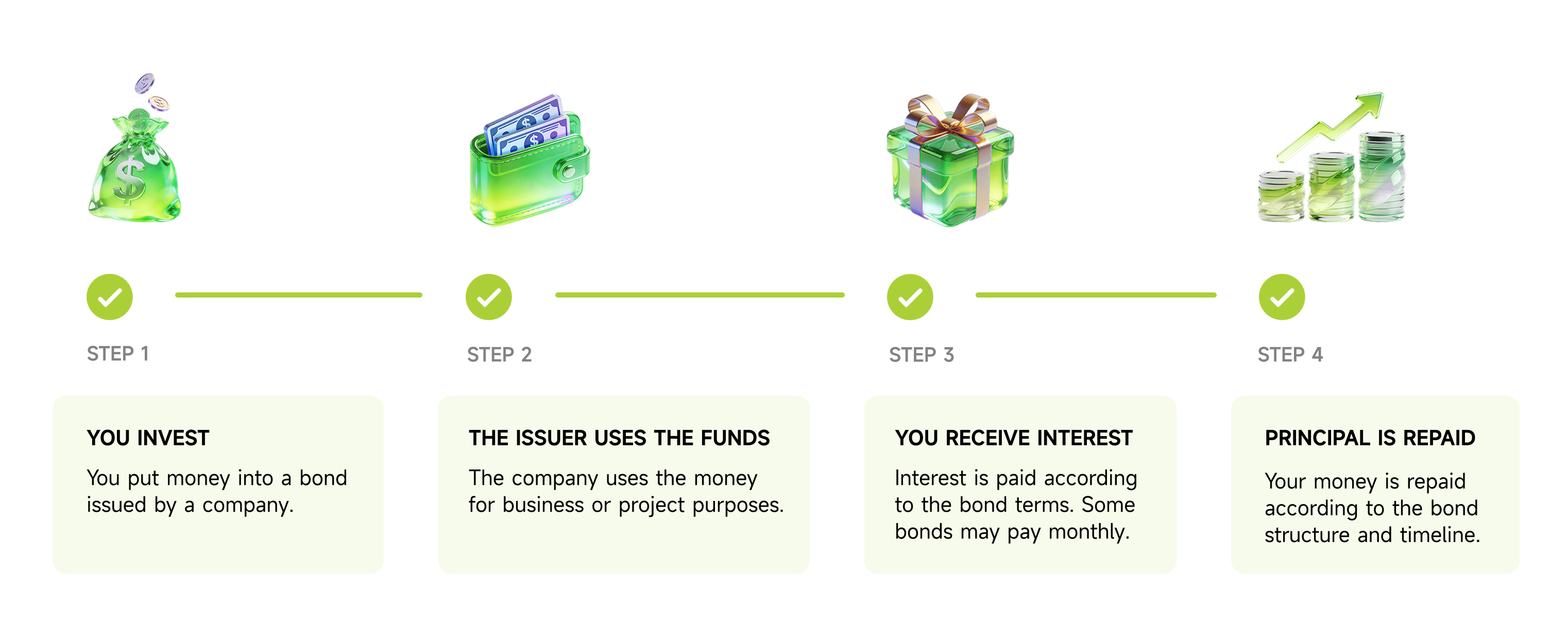
A bond is a type of investment where investors lend money to a company for a set period of time. In return, the company pays interest according to the bond terms and repays the principal based on the agreed structure.
Simple explanation:


When you invest in a bond, you are not buying part of the company. You are lending money to the issuer and receiving interest based on the bond terms.


How Bonds Work


A simple way to understand how investors lend, earn, and get repaid
Key terms to know:

  • Issuer: the company raising funds
  • Tenor / maturity: how long the bond lasts
  • Interest / coupon: the return paid to investors
  • Principal repayment: how and when the invested amount is repaid

Customers may consider bonds when they want to explore money options beyond deposits alone. Bonds may be relevant for customers who are looking for structured income, medium-term planning, and diversification as part of a broader money journey.


Bonds may be considered by customers who want:

  • Regular interest income
  • More money options beyond deposits
  • A structured investment with defined terms
  • Medium-term planning options
  • Diversification across different money products.

Compare Your Options


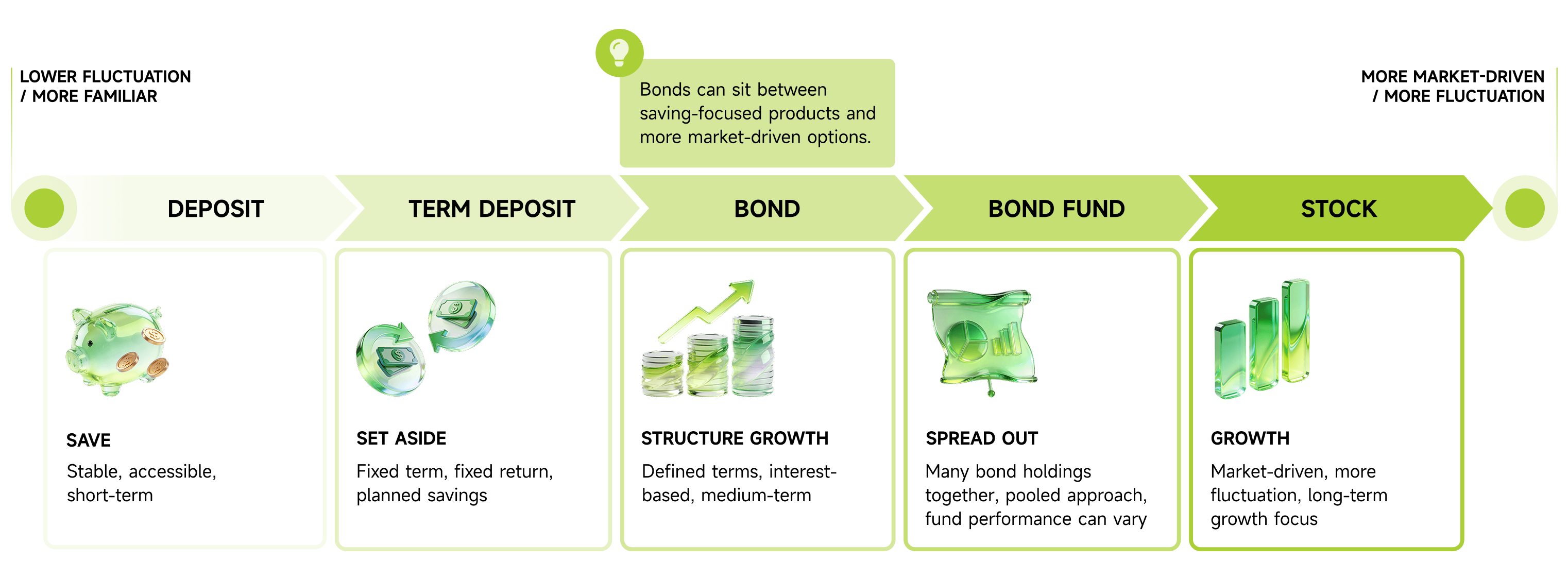
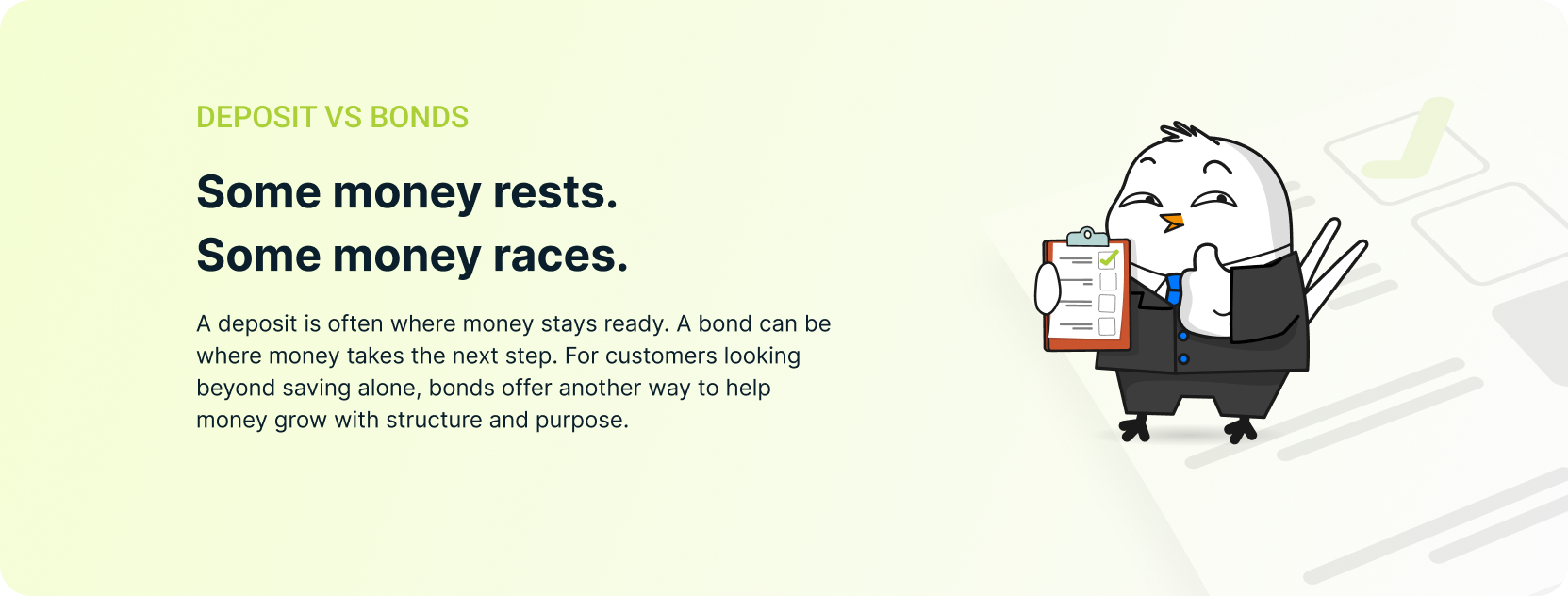
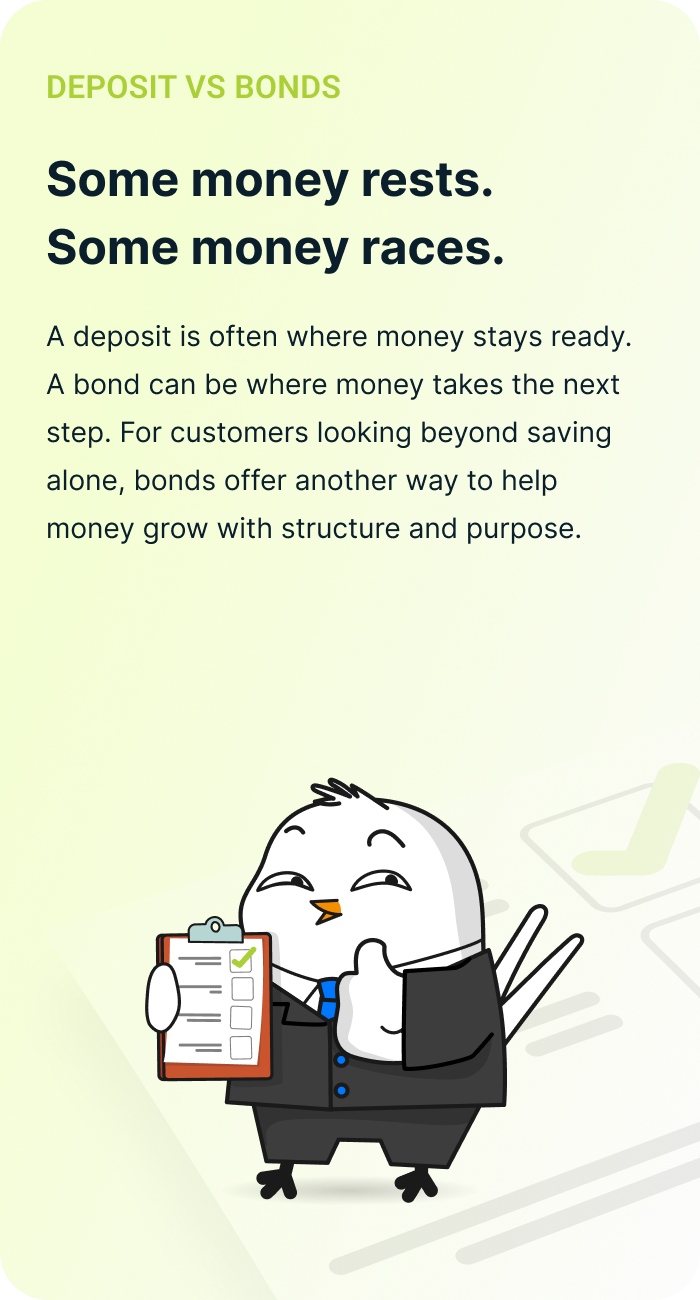
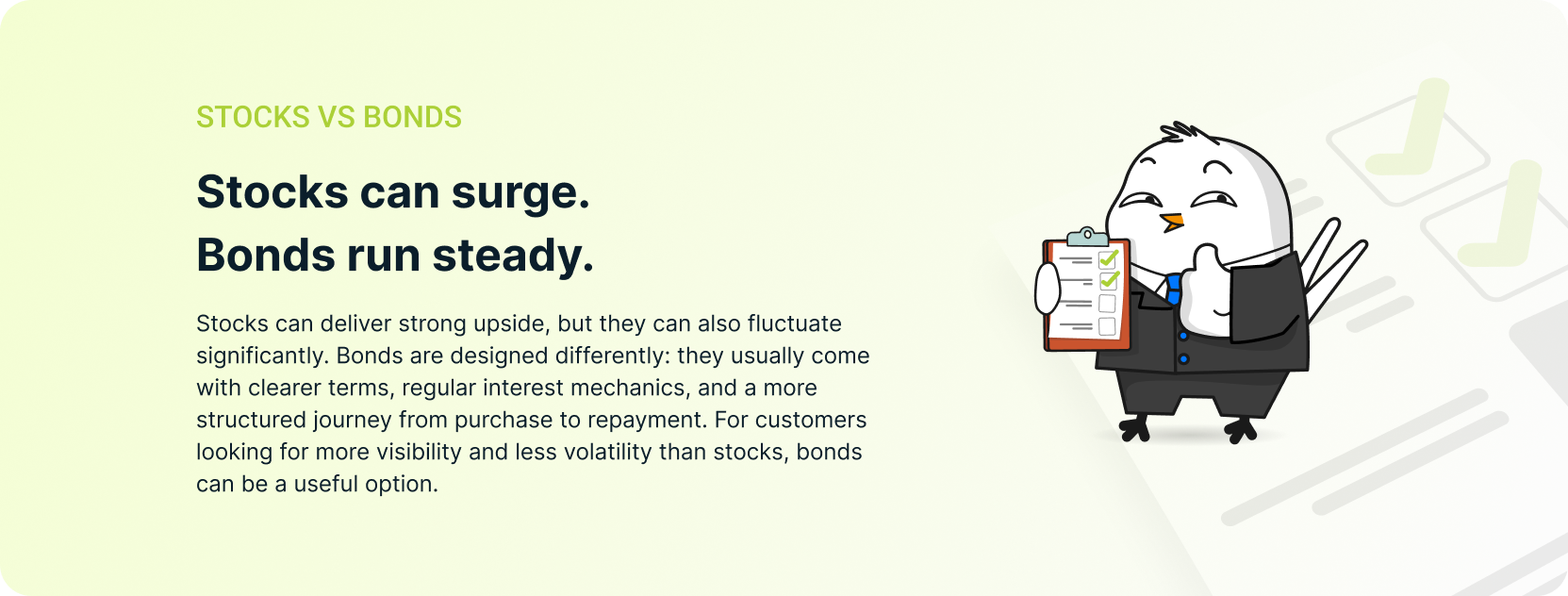
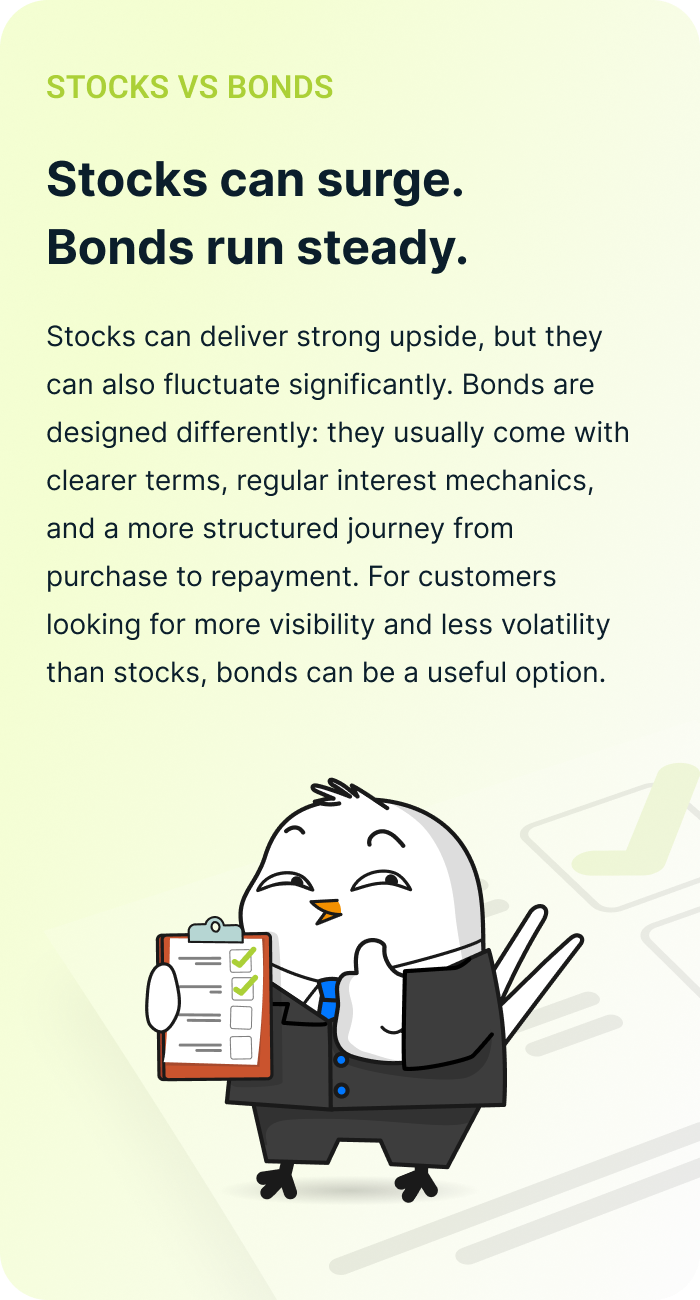
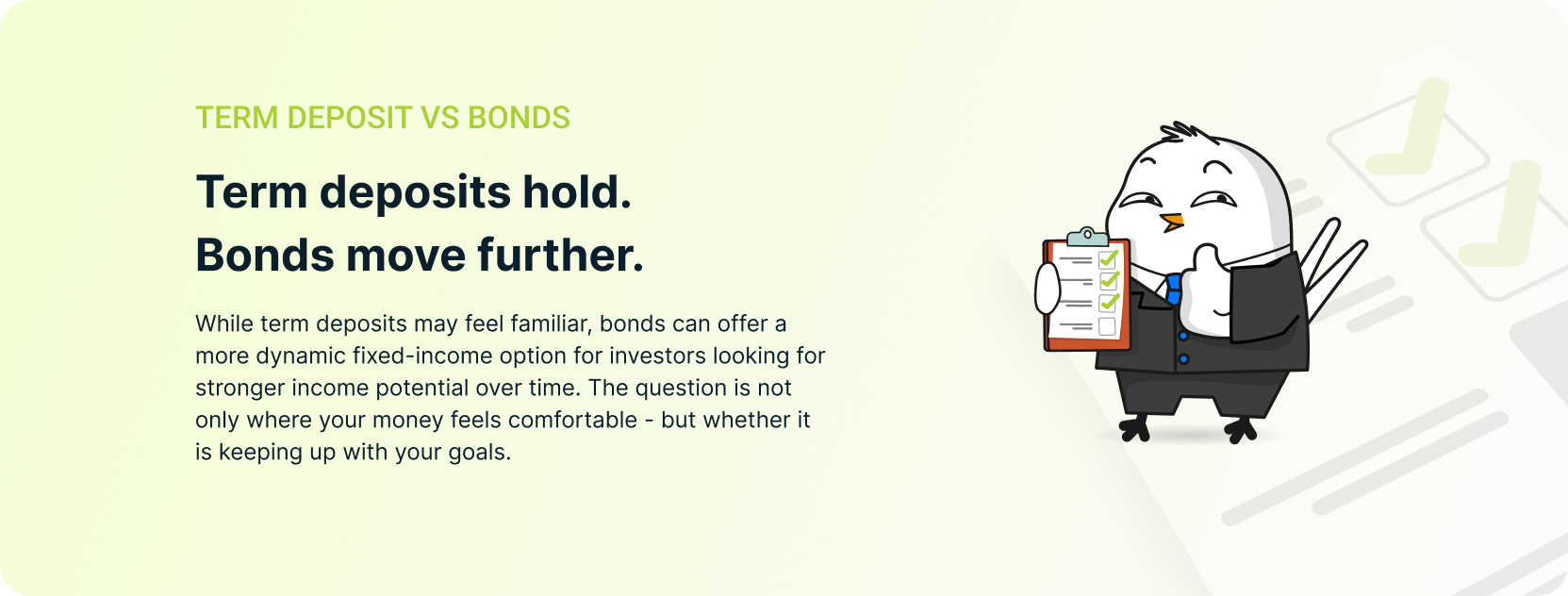
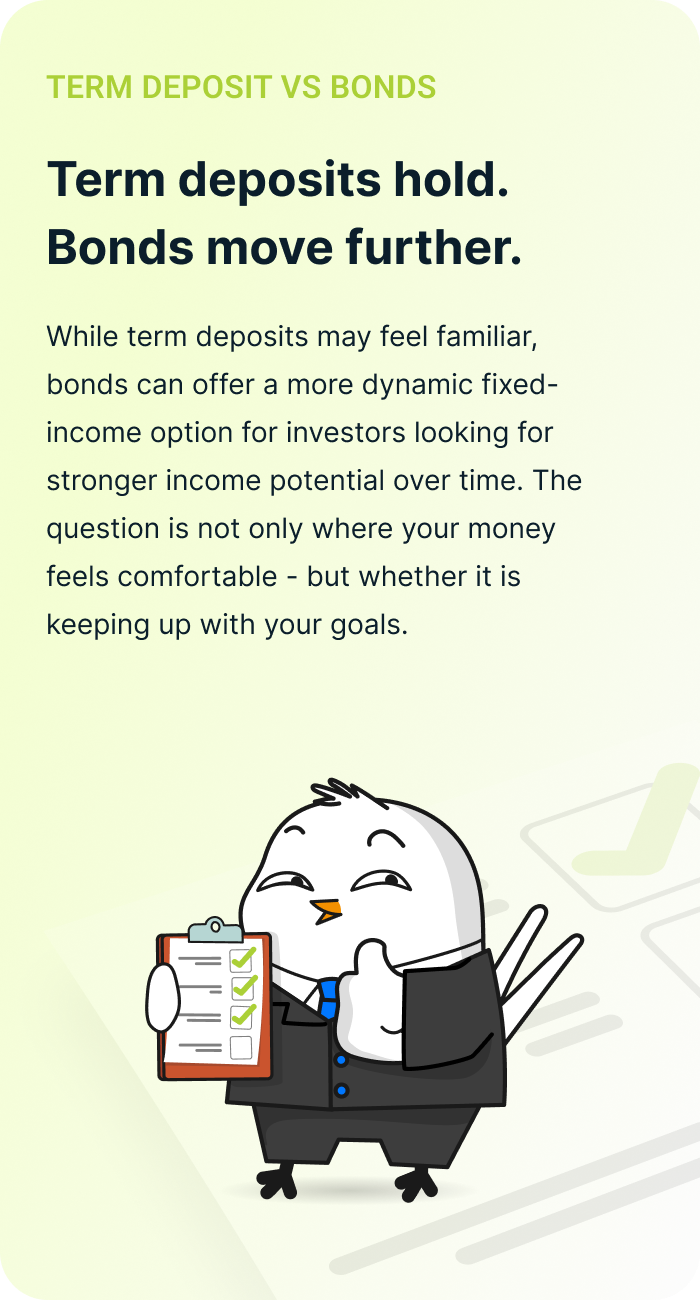
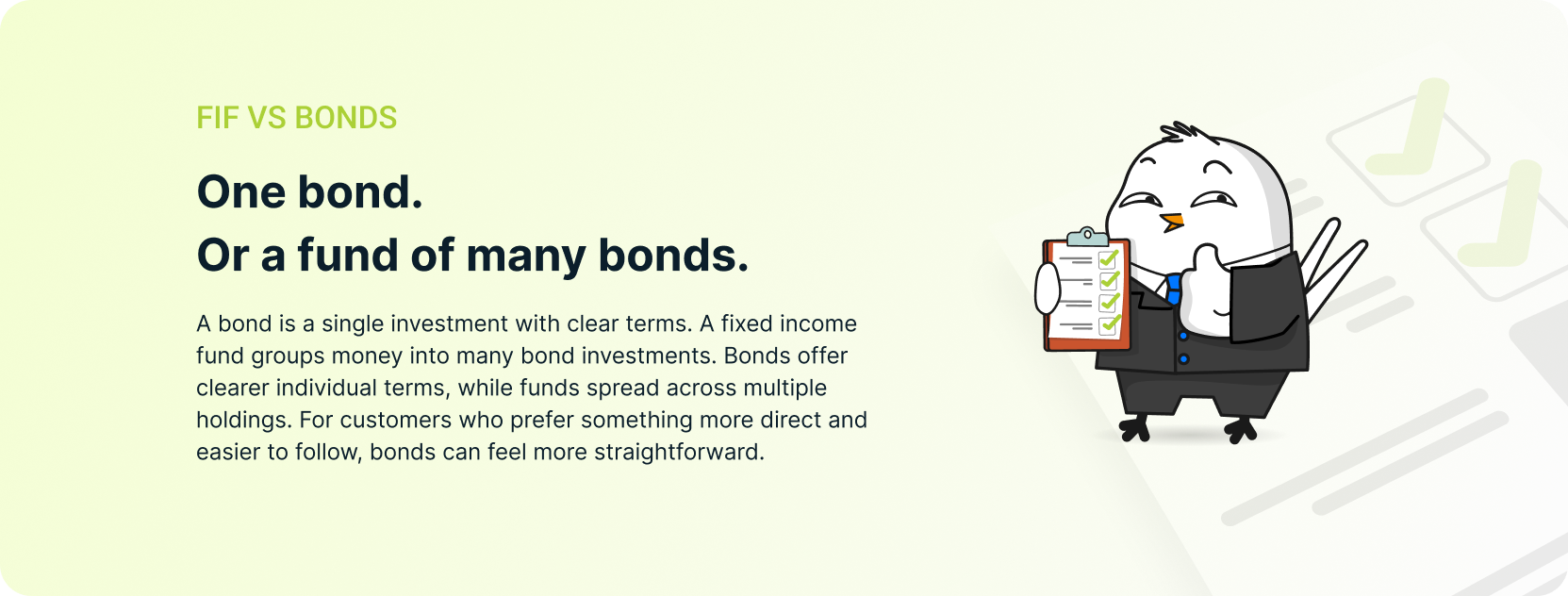
Different money options play different roles. Deposits, time deposits, bonds, fixed income funds, and stocks are not the same. Understanding the differences can help customers ask better questions and make more informed conversations about their money.


Where Bonds Sit Among Your Money Options


Different money options play different roles 

WHAT MONEY OPTION IS RELEVANT TO ME

Deposit:

Best for everyday savings and easy access.

Term Deposit:

Best for planned savings over a fixed period.

Bond:

Best for customers who want structured income, defined terms, and diversification beyond deposits.

Fixed Income Fund:

Best for customers who want exposure to a group of fixed-income assets, subject to fund performance.

Stock:

Best for customers with higher risk appetite and a longer-term growth objective.

Things to Understand Before You Invest


Bonds are investment products and carry risk. The level and type of risk depend on the issuer, bond structure, repayment terms, security or guarantee features where applicable, market conditions, and the specific bond terms.


Key risks to understand:
  • Issuer / credit risk: The issuer may have difficulty making interest or principal payments.
  • Liquidity risk: You may not always be able to sell a bond when you want to.
  • Market / price risk: The market value of a bond may change before maturity.
  • Interest-rate risk: Changes in market interest rates can affect bond prices.
  • Reinvestment risk: Future investment opportunities may offer different returns.
  • Product-specific risks: Individual bonds may have additional terms or risks that investors should review before investing.


Before investing, review the specific bond terms, risks, fees, your goals, timeline, liquidity needs, and comfort level. Your RM or RGS can help explain the information and process if you have questions.
 

Request a Callback

Ready to explore your options? Ready to explore your options? If you’re curious about bonds but still have questions, we can walk you through the basics. Request a callback by filling out the form we’ve prepared for you. Simply click the blue arrow button to get started!