

 Exchange Rate
 Chat to Support

 ភាសាខ្មែរ


Cambodia’s trade is accelerating, but for many small businesses, getting goods across borders is becoming increasingly complex and risky. As trade volumes rise, so do shipment delays, payment uncertainties and documentation challenges, leaving SMEs in urgent need of stronger financial support to keep pace.
According to the General Department of Customs and Excise, exports from January to April 2026 were valued at $11.1 billion, while imports stood at around $12.3 billion, bringing total trade to $23.4 billion, an increase of 19.9 percent compared to the same period last year. The surge in trade is creating new opportunities, but also putting greater pressure on businesses to manage payments, settlement timelines and working capital more efficiently. For small importers and exporters, this often means tying up cash for weeks before goods even arrive.
In 2025, trade value reached $65.2 billion, representing an 18.2 percent increase from 2024 despite global economic uncertainty, border tensions with Thailand and evolving US trade policy. Growth was largely driven by exports, which rose by about 16 percent in 2024 compared with the previous year.
Keen to expand, but financing remains a challenge
Mey Ing, who runs a wholesale and retail bags and accessories business on social media, has been importing from China and Vietnam since 2017. She now plans to expand into selling robotic coffee makers, but funding remains a key barrier.
A single machine costs around $5,000, and while bulk purchases would offer discounts, accessing sufficient capital is difficult. She hopes to secure short-term financing at lower interest rates, along with support in managing shipment risks and documentation.
She also hopes banks can help reduce currency conversion costs, as she currently relies on standard payment cards to pay overseas suppliers.
“Managing cash flow is the hardest part,” she said. “We continue spending during shipping, but we don’t earn anything until the goods arrive.”
She added that access to a letter of credit, a bank guarantee, would help build trust with suppliers and ease cash flow during the waiting period.
Similarly, Chour Sreyroth, an online retailer importing products from China, said she also faces cash flow challenges as she must pay suppliers in full before receiving goods.
“If a bank could offer a guarantee to my supplier, I wouldn’t have to pay before I get the product,” she said.
These challenges are not isolated. Across Cambodia and the wider Mekong region, SMEs face similar constraints.
A Mekong region study on trade finance covering Cambodia, Laos and Vietnam found that a significant share of imports is still settled through upfront cash payments. Only a small portion is supported by formal trade finance instruments such as letters of credit, documentary collections and import loans.
The survey also noted that few banks in Vietnam, and even fewer in Cambodia, are actively providing trade finance services, including guarantees and short-term working capital financing.
Hastening the adoption of trade finance
Josh Williams, Head of APAC Commercial at Surecomp, a digital trade and supply chain finance solutions provider, noted that despite strong trade growth in Cambodia, the use of intermediate trade finance by banks remains low, accounting for around three percent of total trade.
At the same time, SMEs and exporters are increasingly expecting faster, more digital financing solutions.
Williams said early adoption of modern trade finance could offer both commercial and strategic advantages, including stronger market positioning and deeper partnerships with institutions such as the Asian Development Bank and International Finance Corporation.
“Early, thoughtful adoption positions banks not only to capture immediate revenue but to define the market standard for the next decade of digital trade finance,” he said.
Wing Bank’s support for importers and exporters
To address these gaps, banks in Cambodia are increasingly positioning themselves as key partners in trade by offering tools that reduce risk and improve cash flow visibility.
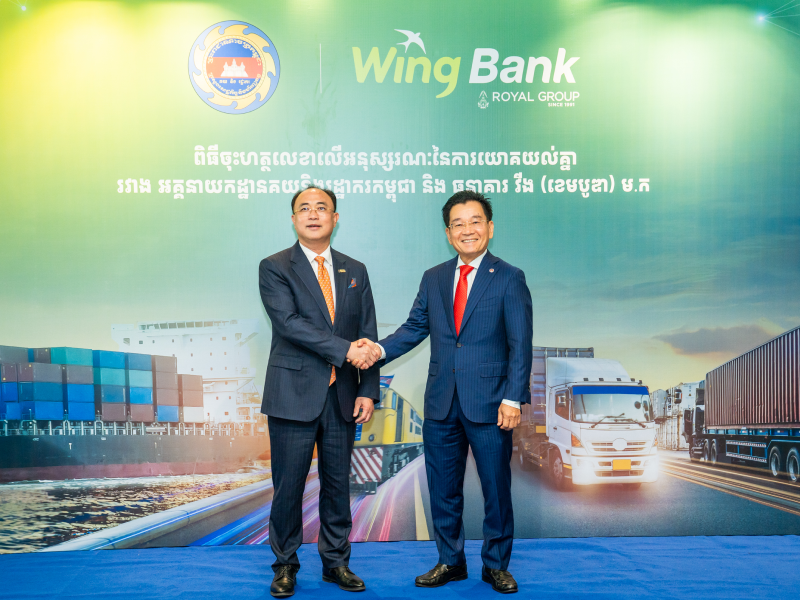
Wing Bank is one such institution, providing trade finance solutions that support businesses across the trade cycle. These include Letters of Credit, Documentary Collections, Bank Guarantees and various working capital financing tools designed to facilitate secure and efficient trade transactions.
“These services are delivered in full compliance with international banking standards, ensuring that our clients trade with confidence, certainty and credibility,” said Chan James, Trade Finance Sales and Advisory Director at Wing Bank.
He added that handling trade transactions independently can expose businesses to operational errors, documentation disputes and payment delays, while banks help mitigate these risks through structured processes and professional oversight.
“Our involvement reduces errors, accelerates processing and protects clients from avoidable disputes or losses,” he said.
As part of its efforts to improve accessibility, Wing Bank is currently offering promotional pricing on selected trade finance services, including reduced fees and waived document handling charges.
As Cambodia’s trade continues to expand, having the right financial partner is becoming increasingly important for businesses navigating a more complex trading environment. Businesses that can better manage risk, cash flow and payment terms will be best positioned to grow in this evolving market.
This article was originally published by Kiripost.

 Support